
 EN
EN
The vertical production of precast concrete elements in a battery system is considered a particularly efficient and space-saving production method. At the same time, opting for such formwork usually entails a significant investment. Particularly during periods of market uncertainty, many manufacturers shy away from this investment. Against this backdrop, Ratec has, for the first time, designed a compact battery mold with just one pocket for Befer, enabling a more cost-effective entry into series production whilst also creating scope for future growth.
Befer Betonfertigteilbau und Betonwaren GmbH is a medium-sized manufacturer of precast concrete elements based in Halberstadt, Saxony-Anhalt. The product spectrum ranges from precast slabs with in-situ topping, wall panels, stairs and balconies for residential and commercial buildings to large columns and downstand beams for hall and industrial construction. The compact single-pocket battery mold was designed for the production of stairwell walls, which are intended to complement the existing product range.
Four elements can be produced per concreting cycle in the pocket with net casting area of 8.0 x 3.3 m. As all elements have identical dimensions, the entire production series can be manufactured without the need for changeovers – a key factor in the efficiency of producing standardized components.
Flexible concept with reduced investment risk
Despite its compact design, the formwork offers a high degree of flexibility. The base and side formers are clad with timber and allow for the manufacture of walls with thicknesses ranging from 100 to 250 mm. The formwork is designed for use with self-compacting concrete (SCC). The deliberate decision not to include integrated vibration systems reduces technical complexity as well as investment and maintenance costs, but above all minimizes noise pollution for staff. The system therefore offers a low-risk entry point, particularly for manufacturers looking to tap into new market segments or gain initial experience with vertical manufacturing.
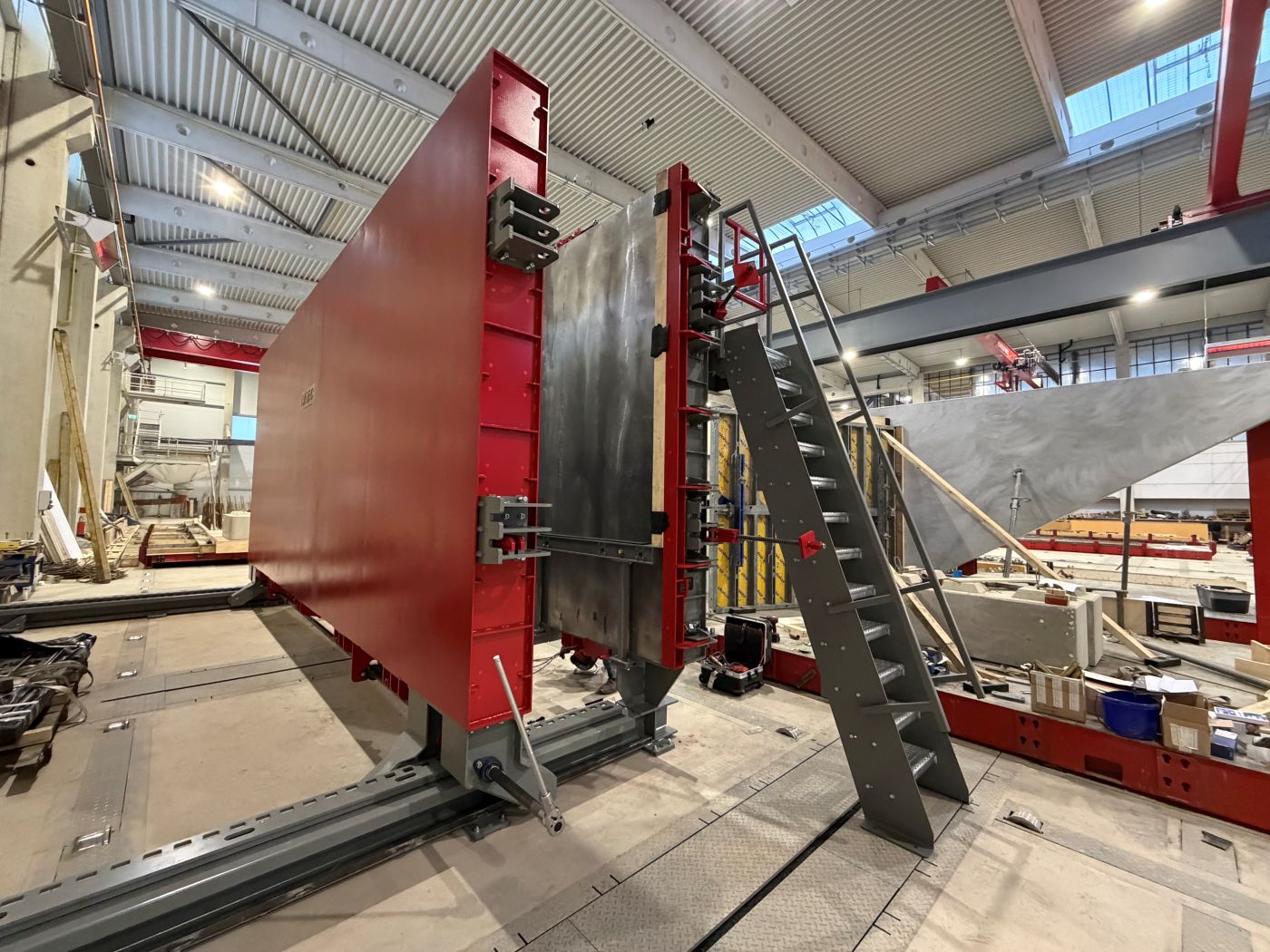
Compact single-cavity battery mould with an option for future expansion

Very low conversion effort thanks to a focus on the series production of identical elements
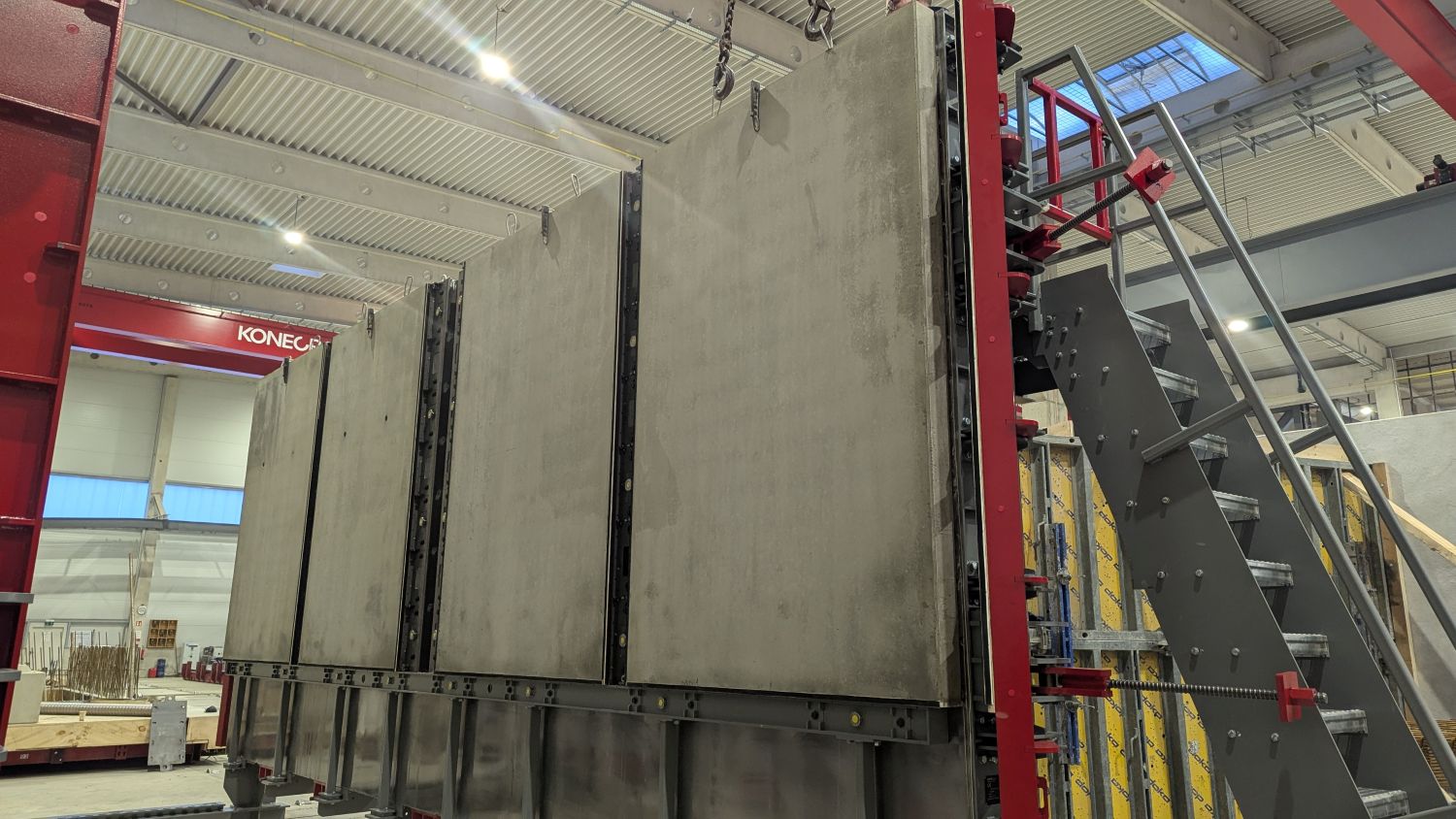
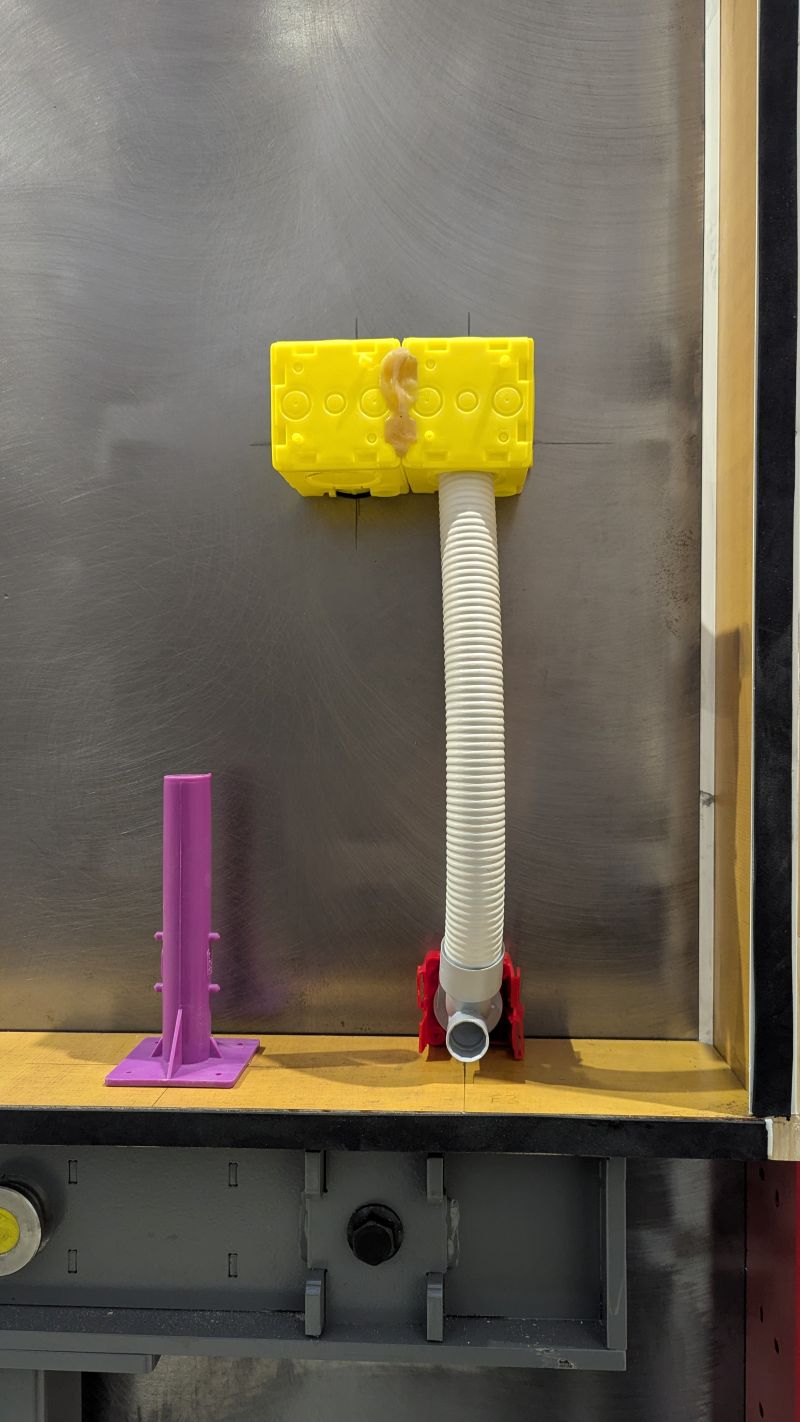
The magnet-based bottom and side formers are designed for wall thicknesses of 100 to 250 mm
Scalable right from the start
The formwork has already been prepared for future expansion. The existing guide rails are already designed in such a way that additional cavities can be integrated in the future. As demand increases, the customer can therefore gradually increase production capacity without having to make fundamental changes to the infrastructure. This scalability provides planning certainty and reduces investment risk, particularly during volatile market phases.
From the customer’s perspective, collaboration played a decisive role alongside the technical solution: “We chose Ratec because we were particularly impressed by the excellent value for money, the technical design of the concept and the company’s know-how, which we were already familiar with. […] Reliability was also particularly important to us – the promised delivery date was met exactly,” explains Volker Weidemann, Managing Director of Befer.
The implementation and support provided throughout the project also left a lasting impression on Volker Weidemann: “The moment I first saw the formwork fully erected in the hall has stayed with me to this day. […] The precision of the manufacturing, the enormous stability and the uncompromising execution with minimal tolerances impressively demonstrate the know-how and quality standards behind it.”
Battery mould as an efficient alternative
Ratec’s battery formwork systems are characterized by their robust construction, high dimensional accuracy and customization to meet customer requirements. Depending on the application, the systems can be filled conventionally from above or, using upcrete® technology, from below. Compaction technology can also be integrated on request.
The battery mould installed at Befer demonstrates that entering the field of vertical production does not necessarily require a large-scale plant. The solution combines the advantages of series production with a manageable investment cost, whilst offering clear growth prospects.
For manufacturers looking to tap into new market segments, gradually expand their production capacities or initially gain experience with battery mould production, this single-cavity battery mould can represent an interesting alternative to larger battery systems. The project illustrates how efficiency, flexibility and investment security can be combined in a compact production solution.