
 EN
Ratec is an innovator and specialist in the field of magnetic formwork. In the last 15 years, however, the company has also attracted increasing attention with its innovative 3D mould solutions. Since 2018, Ratec has already installed over 20 adjustable substation moulds, three variable moulds for cable basements and over 20 roof moulds
- both horizontal and vertical – for the production of transformer substations. With the extensive experience gained from past projects, Ratec has significantly expanded its expertise in this field and at the same time expanded its team in design, production and assembly.
Transformer substations are subject to strict technical requirements in terms of safety and installation. In combination with the customer's desire for a wide range of variants and flexibility, this results in complex requirements for the mould. Ratec meets these challenges with modular and adaptable formwork solutions that enable efficient utilisation of production areas.
The focus is always on customer needs: Right from the planning phase, Ratec works closely with customers to optimise the implementation of specific requirements and production targets. Moulds are designed to facilitate workflows, relieve the burden on plant personnel and ensure a consistently high quality of elements. The robust design and high-quality workmanship ensure that the formwork has a long service life.
A look at the latest projects makes it clear why formwork solu-tions from Ratec are so popular with manufacturers worldwide.
Europe: new production plant equipped
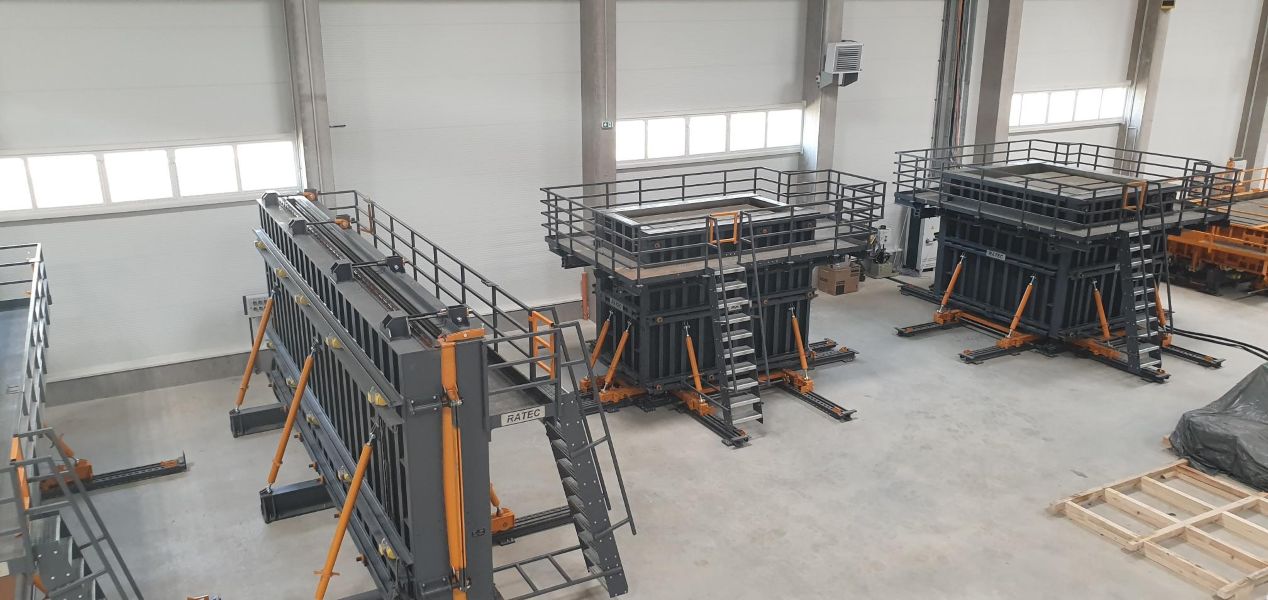
In 2024, several moulds were installed for a new plant in Southeastern Europe, including modular moulds for substations, roof moulds and a mould for cable basements.
Modular mould for substations
- Mould 1: fixed width of 1.30 m, length of 2.00 m or 3.00 m
- Mould 2: fixed length of 3.00 m, width of 2.00 m or 2.45 m
- Mould 3: length adjustable in 20 cm increments from 3.00 to 8.00 m, width 2.50 m, height 2.60 m
- Mould 4: length adjustable in 20 cm increments from 3.00 to 8.00 m, width 2,920 mm, height 2,600 mm or 3,000 mm
Variable basement mould
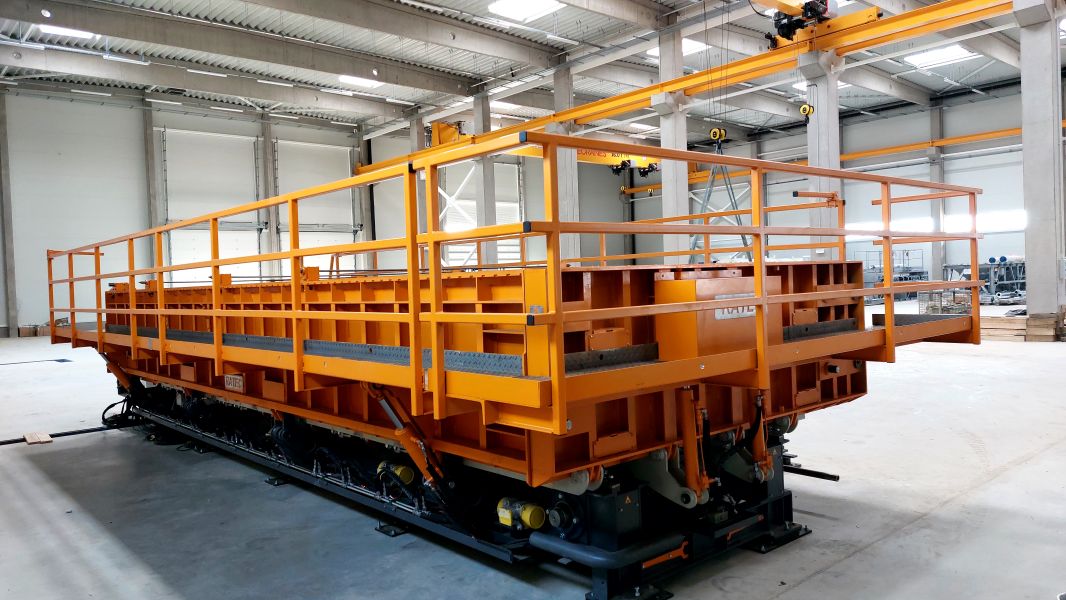
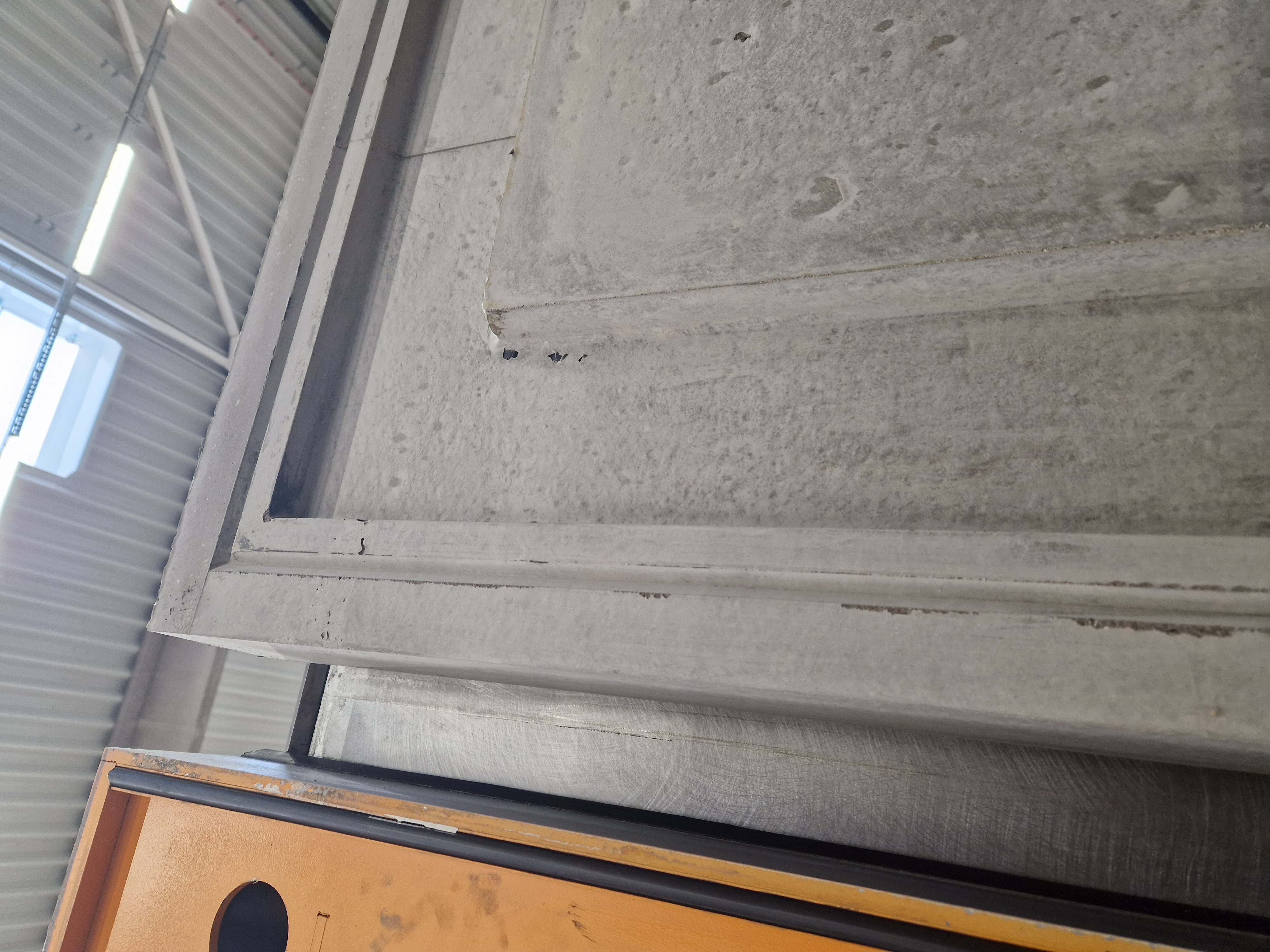
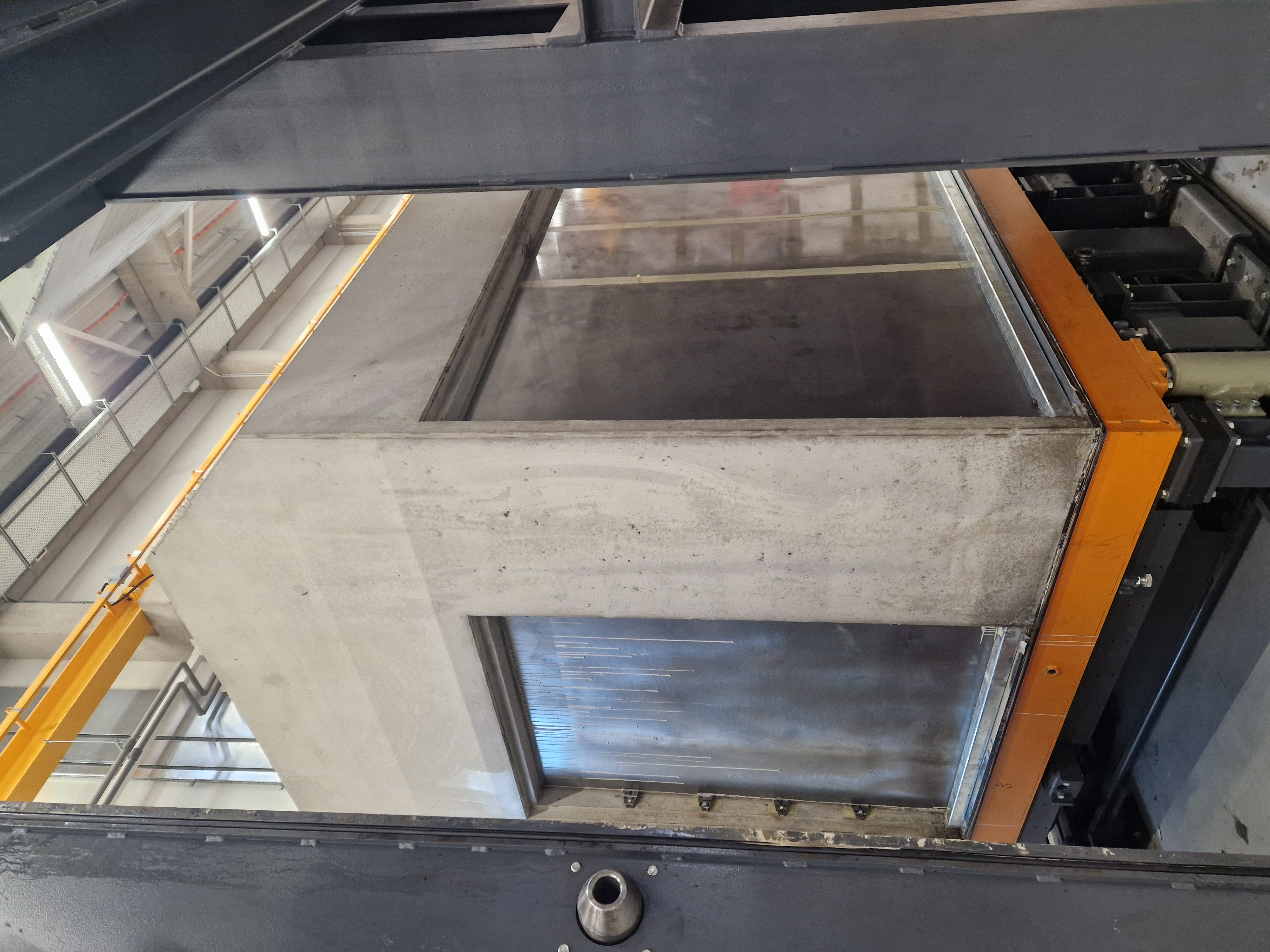
The length of the mould can be adjusted in 20 cm increments from 2.95 m to 7.95 m, with two widths of 2.45 m and 2.87 m, similar to the elements from moulds 3 and 4, and a fixed height of 0.90 m. It consists of a fixed and a movable base end core and various core segments in lengths of 100, 200, 300, 400 and 800 mm, which can be flexibly combined to cover the various lengths. Widening segments are also available for the second width. The core segments are moved hydraulically on a base frame. The outer panels can be raised and lowered hydraulically for moulding and demoulding.
Over 1,000 different variants can be produced
Moulds 3 and 4 as well as the basement mould thus each cover 26 lengths, the basement mould an additional two widths. Mould 4 can also produce two different element heights. For the moulding of interior walls, the requirement was that there should be eight possible variants for interior walls, six of them in a fixed position and two that can be freely positioned along the length in a 10 cm grid. This required a very compact and well thoughtout design solution.
Various recesses are also available for doors, which can also be freely varied and positioned. For moulds 3 and 4, this re-sults in more than 1,000 different variants of concrete bodies that can be produced in one mould. The basement mould is also customised according to the elements produced.
Vertical roof mould
The dimensions of the roof moulds were planned to match the room module moulds:
- 1 roof mould for 2 lengths (3.20 m or 2.10 m) with a fixed height (1.60 m)
- 1 roof mould for 2 heights (2,55 m or 2,10 m) with a fixed length (3,20 m)
- 2 roof moulds with adjustable length in 20 cm incre-ments from 3.20 to 8.40 m - corresponding to the differ-ent variants of the room modules moulds 3 and 4
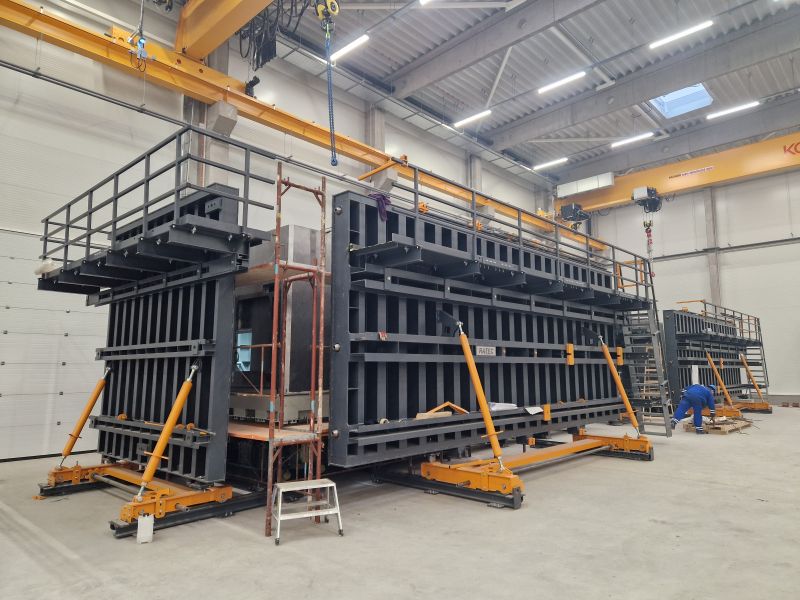
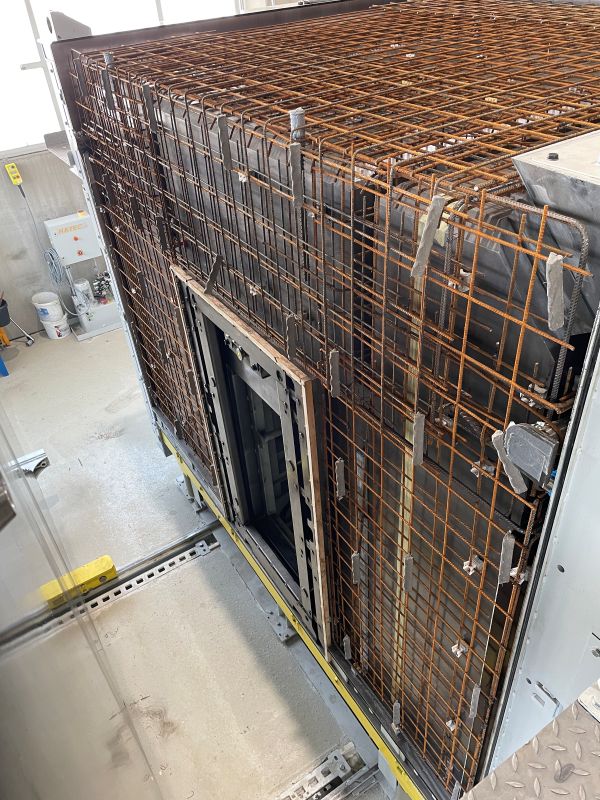
The roofs were to be produced vertically in a spacesaving manner, so the knowledge gained from the development of battery moulds had to be incorporated in the design. They were designed as battery moulds with one pocket each, consisting of a fixed panel for the top of the roof and a sliding panel for the underside of the roof.
A floor formwork, a magnetic side formwork and a swivelling side formwork form the boundary of the formwork surface. For the different element sizes (roof lengths), formwork kits are available in different versions (corresponding to the ele-ment length). A screw-on side support serves as a fixed point. A magnetic side formwork is placed on the other side according to the length of the element.
Supplementary equipment
The moulds are supplemented by other equipment, including a 180° turning station with a capacity of 30 tonnes, suit-able for all elements and basements, hydraulic tilting tables and high-frequency vibrators for concrete compaction for all moulds.
Germany: adjustable mould with fire protection extension
For some elements, there are increased requirements in terms of wall thickness for fire protection reasons. A solution was also developed for this case to extend the length and width by 26 mm on each side. To do this, a few steps are carried out on the floor formwork, the panels, the door recesses and, if necessary, the add-on formwork, and the wall thicknesses are increased with just a few components.
Germany: horizontal roof mould
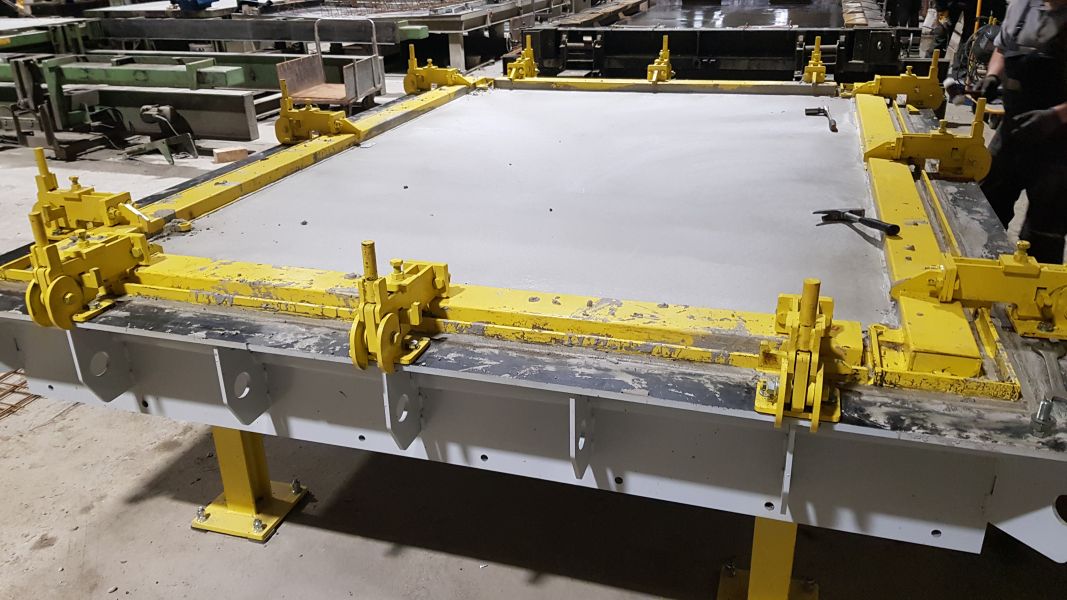
In the case of roof moulds for horizontal production, the mould has hinged profile extensions to form a circumferential recess, which can be opened or closed using a tilting joint. The recess in the element is later used to connect to the room module for the station.
The circumferential swivel arms replace the otherwise required frame traverse, which has to be inserted and lifted out by crane. As a result, the mould significantly reduces crane times and the effort required for moulding and demoulding.
The roof mould is equipped with vibrators and feet with vibration isolators as standard. Dimensions and other accessories are customised.
Accessories
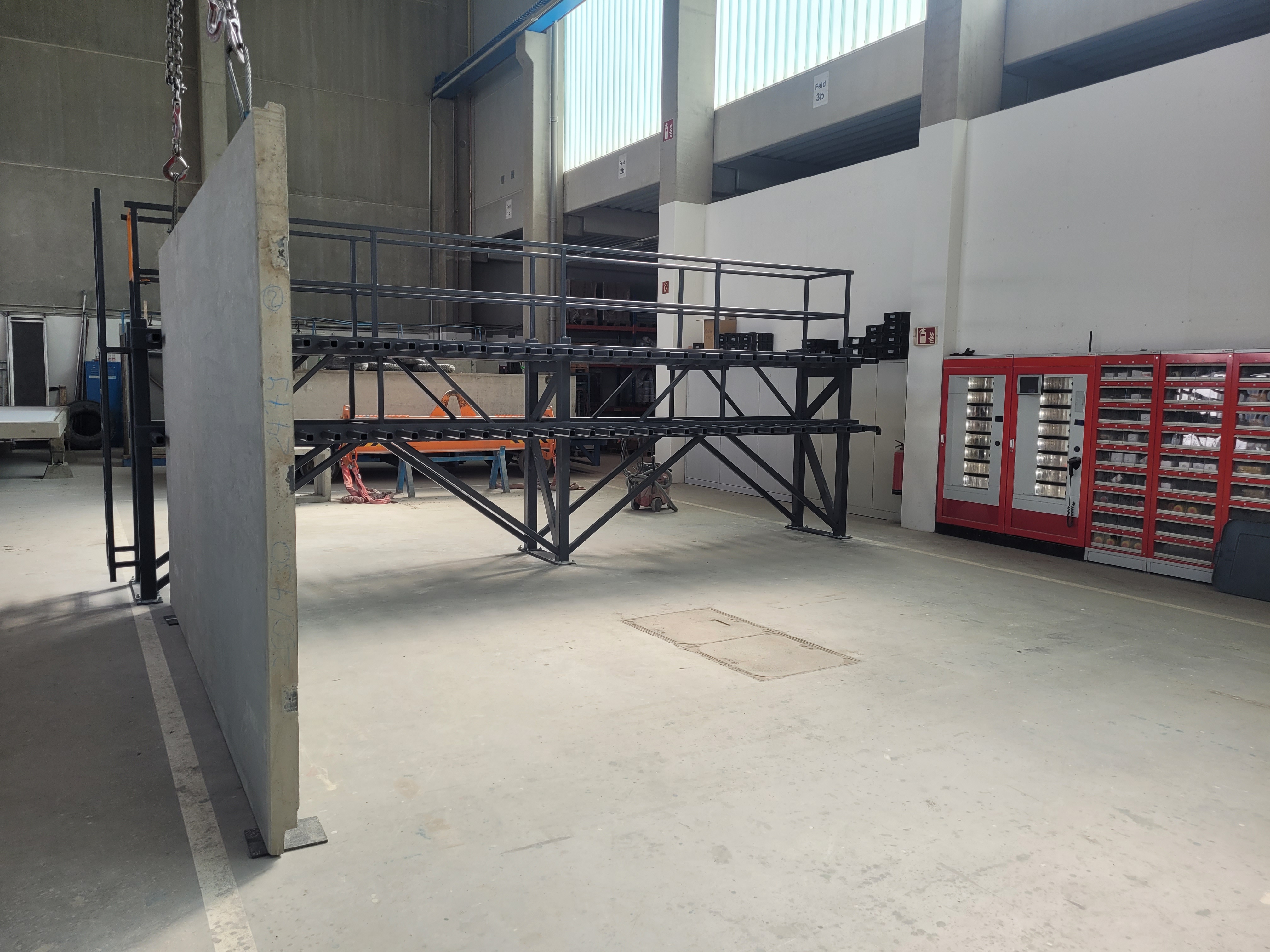
Ratec also supplied accessories such as storage racks for the vertical storage of concrete roofs and wall elements. These space-saving solutions ensure the safe storage of large concrete elements. The storage racks are planned and configured as required in terms of the number of storage locations and the necessary load capacity according to the dimensions and weight of the elements.
Intelligent formwork extensions using magnet technology
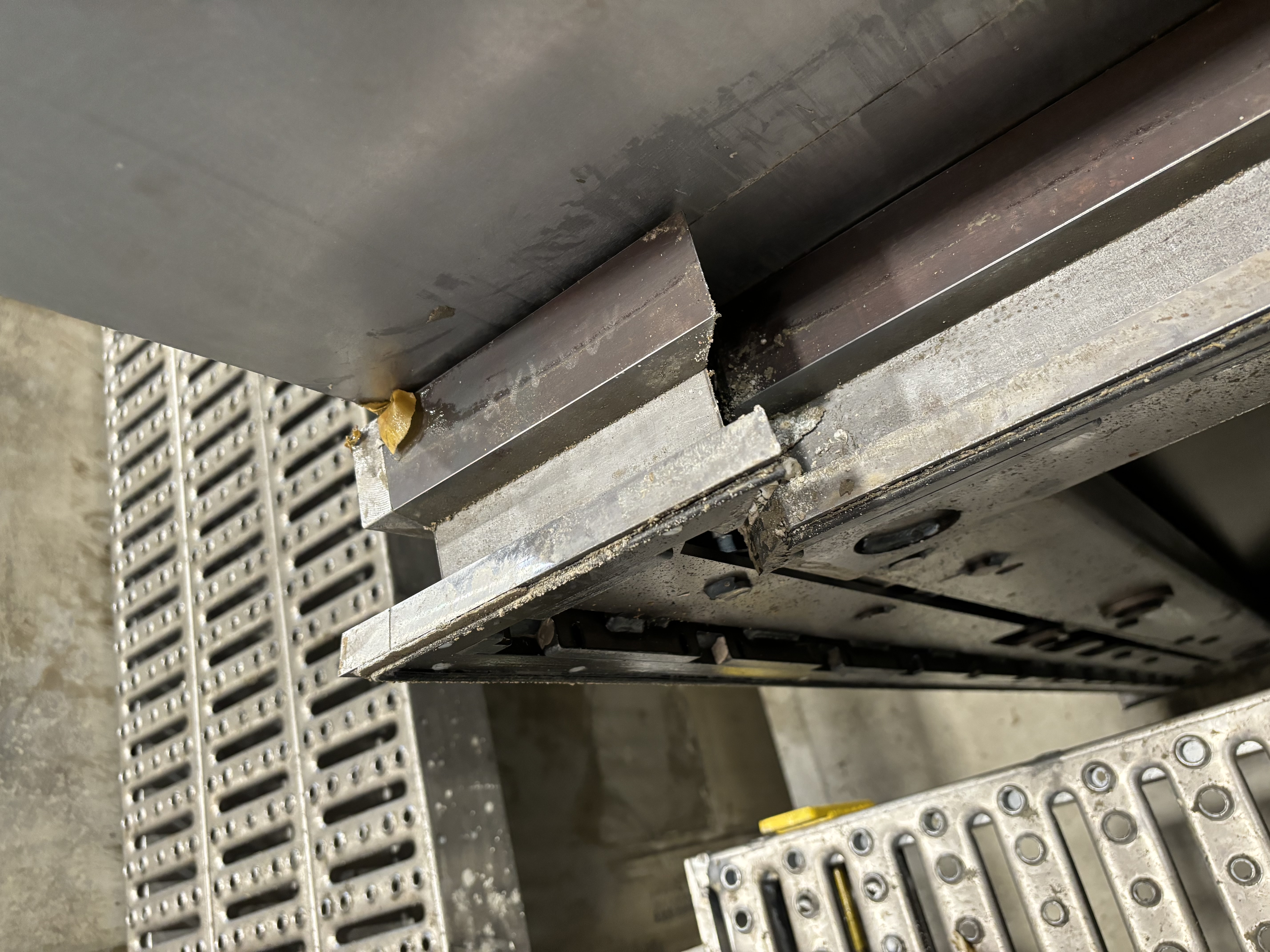
As a specialist in the field of magnetic formwork, Ratec has nu-merous formwork extensions for recesses in its programme. With frequently changing recess sizes, manual placement and removal of the recesses is often necessary. However, with only a few constant sizes, it is worth investing in more intel-ligent solutions that are easier and faster to handle. One of these solutions is a door recess with movable side beams that are automatically pulled upwards when the concrete element is lifted, folding inwards and thus shrinking. The formwork can therefore remain attached to the inner core and is ready for the next casting process in two quick steps.
The projects presented provide an insight into the variety of production solutions for transformer substations developed by Ratec. The starting point is always the catalogue of elements that a customer wants to produce. On this basis, the mould and its variation options are developed in such a way that they are space-saving, easy to use and save resources. The focus is always on comprehensive advice for efficient production processes.
Prospects: adjustable 3D moulds with shrink core
Several projects for 3D moulds are currently under develop-ment, including an elevator shaft mould with a shrink core that is variable in length and width from 110 to 2,750 mm. A similar flexible solution with a shrink core is currently being developed in Asia, where a mould for so-called household shelters is being created. Like elevator shafts, these household shelters are also 4-sided concrete elements that are installed in residential buildings in Singapore in accordance with the usual building standards there. This type of room module is characterised by a higher weight, due to the greater wall thicknesses of between 250 - 300 mm, as well as complex connection details for anchoring in the buildings.
Conclusions
Ratec moulds and formwork systems can set standards in precast concrete element production - especially for demanding projects such as transformer substations. Precision, efficiency, sustainability and flexibility make these systems a very suitable solution for manufacturers who prioritise quality and cost-effectiveness.
Ratec will be presenting these and other solutions and projects at bauma Munich from 7 to 13 April 2025 – visit us at booth 348 in hall B1.
Ratec is an innovator and specialist in the field of magnetic formwork. In the last 15 years, however, the company has also attracted increasing attention with its innovative 3D mould solutions. Since 2018, Ratec has already installed over 20 adjustable substation moulds, three variable moulds for cable basements and over 20 roof moulds
- both horizontal and vertical – for the production of transformer substations. With the extensive experience gained from past projects, Ratec has significantly expanded its expertise in this field and at the same time expanded its team in design, production and assembly.
Transformer substations are subject to strict technical requirements in terms of safety and installation. In combination with the customer's desire for a wide range of variants and flexibility, this results in complex requirements for the mould. Ratec meets these challenges with modular and adaptable formwork solutions that enable efficient utilisation of production areas.
The focus is always on customer needs: Right from the planning phase, Ratec works closely with customers to optimise the implementation of specific requirements and production targets. Moulds are designed to facilitate workflows, relieve the burden on plant personnel and ensure a consistently high quality of elements. The robust design and high-quality workmanship ensure that the formwork has a long service life.
A look at the latest projects makes it clear why formwork solu-tions from Ratec are so popular with manufacturers worldwide.
Europe: new production plant equipped
In 2024, several moulds were installed for a new plant in Southeastern Europe, including modular moulds for substations, roof moulds and a mould for cable basements.
Modular mould for substations
- Mould 1: fixed width of 1.30 m, length of 2.00 m or 3.00 m
- Mould 2: fixed length of 3.00 m, width of 2.00 m or 2.45 m
- Mould 3: length adjustable in 20 cm increments from 3.00 to 8.00 m, width 2.50 m, height 2.60 m
- Mould 4: length adjustable in 20 cm increments from 3.00 to 8.00 m, width 2,920 mm, height 2,600 mm or 3,000 mm
Variable basement mould
The length of the mould can be adjusted in 20 cm increments from 2.95 m to 7.95 m, with two widths of 2.45 m and 2.87 m, similar to the elements from moulds 3 and 4, and a fixed height of 0.90 m. It consists of a fixed and a movable base end core and various core segments in lengths of 100, 200, 300, 400 and 800 mm, which can be flexibly combined to cover the various lengths. Widening segments are also available for the second width. The core segments are moved hydraulically on a base frame. The outer panels can be raised and lowered hydraulically for moulding and demoulding.
Over 1,000 different variants can be produced
Moulds 3 and 4 as well as the basement mould thus each cover 26 lengths, the basement mould an additional two widths. Mould 4 can also produce two different element heights. For the moulding of interior walls, the requirement was that there should be eight possible variants for interior walls, six of them in a fixed position and two that can be freely positioned along the length in a 10 cm grid. This required a very compact and well thoughtout design solution.
Various recesses are also available for doors, which can also be freely varied and positioned. For moulds 3 and 4, this re-sults in more than 1,000 different variants of concrete bodies that can be produced in one mould. The basement mould is also customised according to the elements produced.
Vertical roof mould
The dimensions of the roof moulds were planned to match the room module moulds:
- 1 roof mould for 2 lengths (3.20 m or 2.10 m) with a fixed height (1.60 m)
- 1 roof mould for 2 heights (2,55 m or 2,10 m) with a fixed length (3,20 m)
- 2 roof moulds with adjustable length in 20 cm incre-ments from 3.20 to 8.40 m - corresponding to the differ-ent variants of the room modules moulds 3 and 4
The roofs were to be produced vertically in a spacesaving manner, so the knowledge gained from the development of battery moulds had to be incorporated in the design. They were designed as battery moulds with one pocket each, consisting of a fixed panel for the top of the roof and a sliding panel for the underside of the roof.
A floor formwork, a magnetic side formwork and a swivelling side formwork form the boundary of the formwork surface. For the different element sizes (roof lengths), formwork kits are available in different versions (corresponding to the ele-ment length). A screw-on side support serves as a fixed point. A magnetic side formwork is placed on the other side according to the length of the element.
Supplementary equipment
The moulds are supplemented by other equipment, including a 180° turning station with a capacity of 30 tonnes, suit-able for all elements and basements, hydraulic tilting tables and high-frequency vibrators for concrete compaction for all moulds.
Germany: adjustable mould with fire protection extension
For some elements, there are increased requirements in terms of wall thickness for fire protection reasons. A solution was also developed for this case to extend the length and width by 26 mm on each side. To do this, a few steps are carried out on the floor formwork, the panels, the door recesses and, if necessary, the add-on formwork, and the wall thicknesses are increased with just a few components.
Germany: horizontal roof mould
In the case of roof moulds for horizontal production, the mould has hinged profile extensions to form a circumferential recess, which can be opened or closed using a tilting joint. The recess in the element is later used to connect to the room module for the station.
The circumferential swivel arms replace the otherwise required frame traverse, which has to be inserted and lifted out by crane. As a result, the mould significantly reduces crane times and the effort required for moulding and demoulding.
The roof mould is equipped with vibrators and feet with vibration isolators as standard. Dimensions and other accessories are customised.
Accessories
Ratec also supplied accessories such as storage racks for the vertical storage of concrete roofs and wall elements. These space-saving solutions ensure the safe storage of large concrete elements. The storage racks are planned and configured as required in terms of the number of storage locations and the necessary load capacity according to the dimensions and weight of the elements.
Intelligent formwork extensions using magnet technology
As a specialist in the field of magnetic formwork, Ratec has nu-merous formwork extensions for recesses in its programme. With frequently changing recess sizes, manual placement and removal of the recesses is often necessary. However, with only a few constant sizes, it is worth investing in more intel-ligent solutions that are easier and faster to handle. One of these solutions is a door recess with movable side beams that are automatically pulled upwards when the concrete element is lifted, folding inwards and thus shrinking. The formwork can therefore remain attached to the inner core and is ready for the next casting process in two quick steps.
The projects presented provide an insight into the variety of production solutions for transformer substations developed by Ratec. The starting point is always the catalogue of elements that a customer wants to produce. On this basis, the mould and its variation options are developed in such a way that they are space-saving, easy to use and save resources. The focus is always on comprehensive advice for efficient production processes.
Prospects: adjustable 3D moulds with shrink core
Several projects for 3D moulds are currently under develop-ment, including an elevator shaft mould with a shrink core that is variable in length and width from 110 to 2,750 mm. A similar flexible solution with a shrink core is currently being developed in Asia, where a mould for so-called household shelters is being created. Like elevator shafts, these household shelters are also 4-sided concrete elements that are installed in residential buildings in Singapore in accordance with the usual building standards there. This type of room module is characterised by a higher weight, due to the greater wall thicknesses of between 250 - 300 mm, as well as complex connection details for anchoring in the buildings.
Conclusions
Ratec moulds and formwork systems can set standards in precast concrete element production - especially for demanding projects such as transformer substations. Precision, efficiency, sustainability and flexibility make these systems a very suitable solution for manufacturers who prioritise quality and cost-effectiveness.
Ratec will be presenting these and other solutions and projects at bauma Munich from 7 to 13 April 2025 – visit us at booth 348 in hall B1.