
 EN
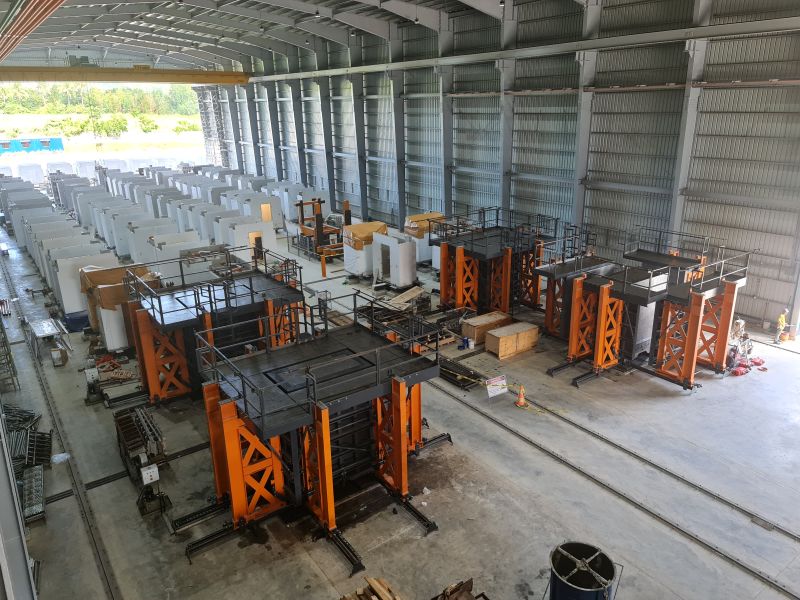
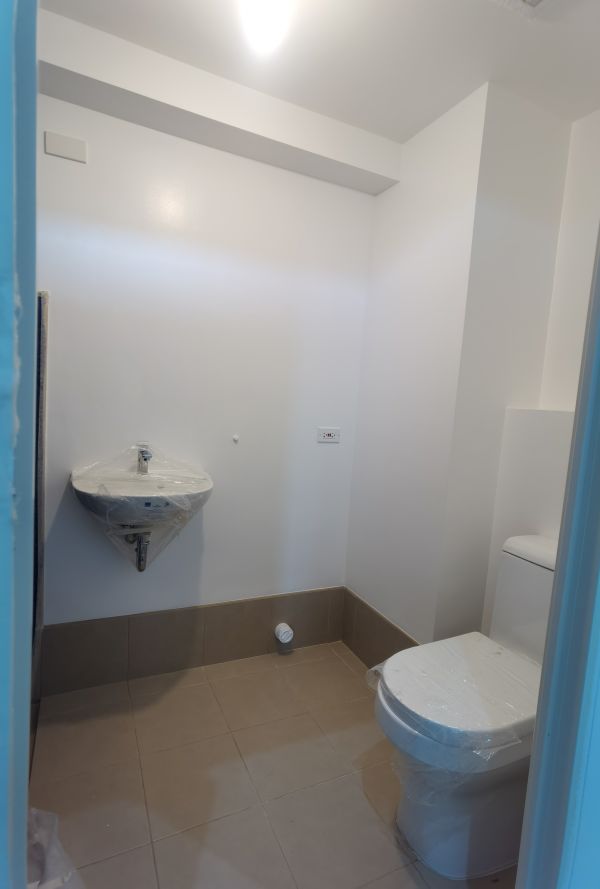
Sanitary or bathroom pods, as prefabricated, prefinished elements, are a common application of volumetric precast concrete elements often used in residential or hotel build-ing projects. In Asia, the term PBU (Prefabricated Bathroom Unit), is commonly used to describe such elements. One of the main advantages of this system is the completion of architectural fit-out and MEP works in a controlled environment, resulting in better productivity and consistent quality. This results in an increase of complexity in the coordination and preparation of element drawings - making the level of detailing very crucial.
With the flexible 3D mould kit, Ratec was able to provide an economical solution for the production of such elements of the highest quality. Ratec Asia, the company’s Asia office based in Singapore, was directly involved in the planning and realization of a modern PBU production factory in the Philippines. The project involved the development of the PBU system, the planning and design of the production factory, and the supply of moulds and other equipment for their cus-tomers, Makati Development Corporation (MDC) and its subsidiary company MDC ConQrete, Inc. (MCI).
MDC is a leading Engineering, Procurement, Construction, and Construction Management company in the Philippines. The company is a wholly-owned subsidiary of top Philippine real estate developer Ayala Land, Inc. MCI, on the other hand, manages MDC’s ready-mix concrete and precast production facilities and is the Philippines’ leading supplier of high-quality concrete and precast concrete elements. These products are manufactured in various precast plants, allowing the company to serve hundreds of MDC projects across the country. MDC has been a customer of Ratec and Ratec Asia for a long time - working together to innovate solutions in the field of magnetic formwork systems and pumping technology for MDC’s precast plants. The project with MDC began in the third quarter of 2019 when the company invested in PBU production. With extensive experience in PBU and modular construction in Singapore, Ratec Asia was engaged as a suitable partner for an end-to-end solution. Several flexible 3D mould kits from Ratec Asia have also been used in Singapore since 2019, allowing MDC an opportunity to get a close-up, hands-on experience with the formwork technology offered.
As part of the end-to-end solution provided to MDC, Ratec Asia was involved as a consultant in the development of the construction system, pushing for the adaption of the Design for Manufacturing and Assembly (DfMA) philosophy and methodology. DfMA is one of the important pillars defined by the Singapore Building and Construction Authority as part of its industry transformation roadmap. The strong level of adaptation of Prefabricated Prefinished Volumetric Construction (PPVC) and PBU, among other DfMA technologies in Singapore, provided the Asia Team ample opportunities to gain hands-on in-depth experience and knowledge in design and detailing, planning, production, and management of such construction systems. Through the experience gained in the application of DfMA throughout numerous projects, the Ratec Asia team has been able to provide MDC with holistic support in adapting the modular principle, preparing element drawings, and planning the plant, always with cost efficiency, productivity, and quality in mind.
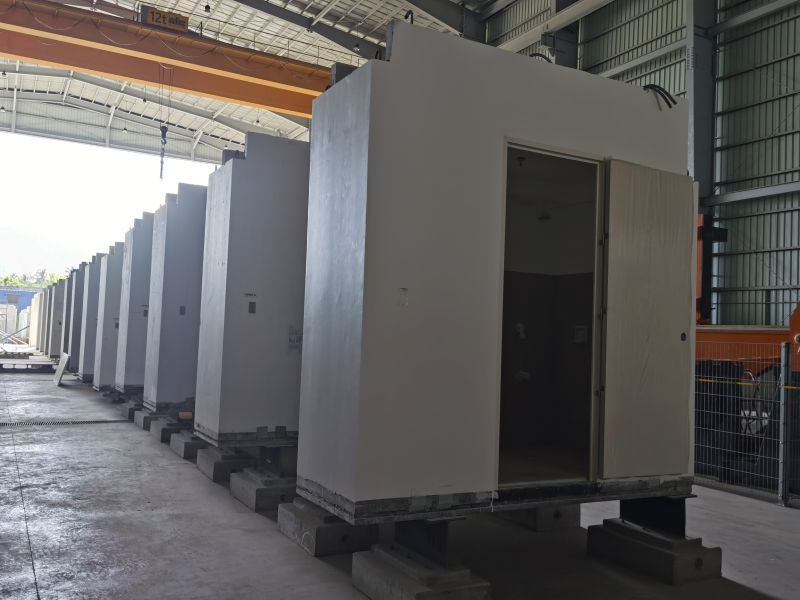

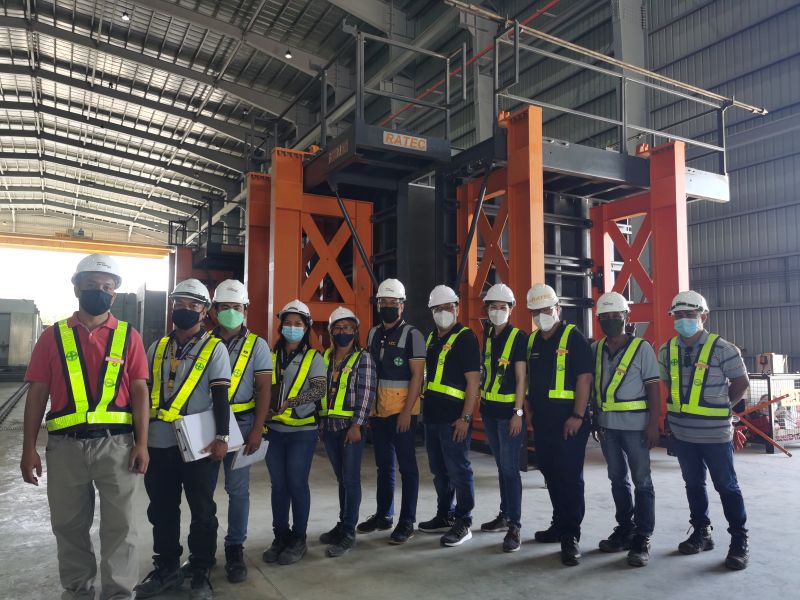
The plant in San Felix, Batangas near Manila has a production floor of 30 Metres in width and 120 Metres in length. Together with MDC, Ratec Asia created the design concept for the bathroom modules and developed the requirement profile for mould development based on the various production parameters.
A total of four moulds were installed to produce two variants of the PBU system with a floor area of 4,12 Square Metres. For other variants, the formwork can be converted when necessary. For this purpose, the inner core and the outer panels are made up of standardized sections that can be adapted to other geometries by replacing or removing them. This way, the mould can be varied 450 Millimetres lengthwise and 300 Millimetres in width, and cover wall thicknesses between 75–125 Millimetres. Even the height of the modules can be changed from 2.00 –2.90 Metres by adjusting the floor shuttering. Based on the customers’ requirements and parameters provided, the moulds can be reconfigured to up to 63 different marking or module types – again demonstrating its flexibility.
Since the conversion of the mould takes up to a few days, the successive continuous production of each variant over a longer period optimally exploits the advantages of the 3D mould kit. Besides flexibility, this mould system is also characterized by a patented shrinking mechanism in which the inner core is shrunk, and the element is raised in the same operation – allowing a soft demoulding process – resulting in better productivity and quality of the end product. A turning station was also included in the scope of delivery. Further formwork components for recesses such as shrinkable doors and window frames were also provided.
The plant was designed to achieve MDC’s target of produc-ing up to 2000 PBUs per year. The experience of the German and Asian teams in modular construction and mould devel-opment enabled Ratec to adequately support MDC in the development of the PBU system, the planning of the factory, and the equipment with formwork and machine technology. In addition to the formwork planning and optimization, the overall processes in production were optimized as part of the installation planning, minimizing handling and processes to optimize output. Special considerations in the alignment of formwork, crane planning, and equipment placement are taken to ensure this.
With the team having ample experience and hands-on knowledge of actual production, Ratec can provide initial production management support to their customers, shortening their learning curve.
Results
Compared to conventional project-related installed moulds, the use of the 3D mould kit can achieve up to a 77% increase in efficiency, measured by man-hours, and a 64% increase in speed, measured in the total time for the completion of a PBU. “This project was challenging in many ways,” says Raymond Chan, Director of Ratec Asia. “An international collaboration of teams from the Philippines, Singapore, and Germany, as well as the aligning of different expectations and requirements - was made even more difficult when the pandemic struck. But MDC’s determination remained strong and their confidence and trust in us never wavered in the light of the many challenges. We are glad that we never let them down. When we visited the plant for the first time, one word immediately came into mind: impressive! Kudos to all involved. Great job.”
Milbert C. Payumo, MCI Precast General Manager at MDC, was very satisfied with the outcome: “Ratec has been a great partner in providing solutions and products to our company. Ratec catered to our requirements by efficiently producing quality precast products using their high-precision moulds and forms, and in turn, effectively cutting our costs for defects and reworks. As our catered products continue to grow, we are excited and confident to work with Ratec who will accompany us in championing our future expansions.”